Cross-Post Social Content With Intent
Efficient cross-posting is adaptation, not duplication. Build a content atom, define channel-specific changes, and measure whether each version serves its audience.
Read the guideInstaPubs.com turns scattered social-media tasks into practical workflows for planning, scheduling, creator collaboration, API publishing, and meaningful analytics.
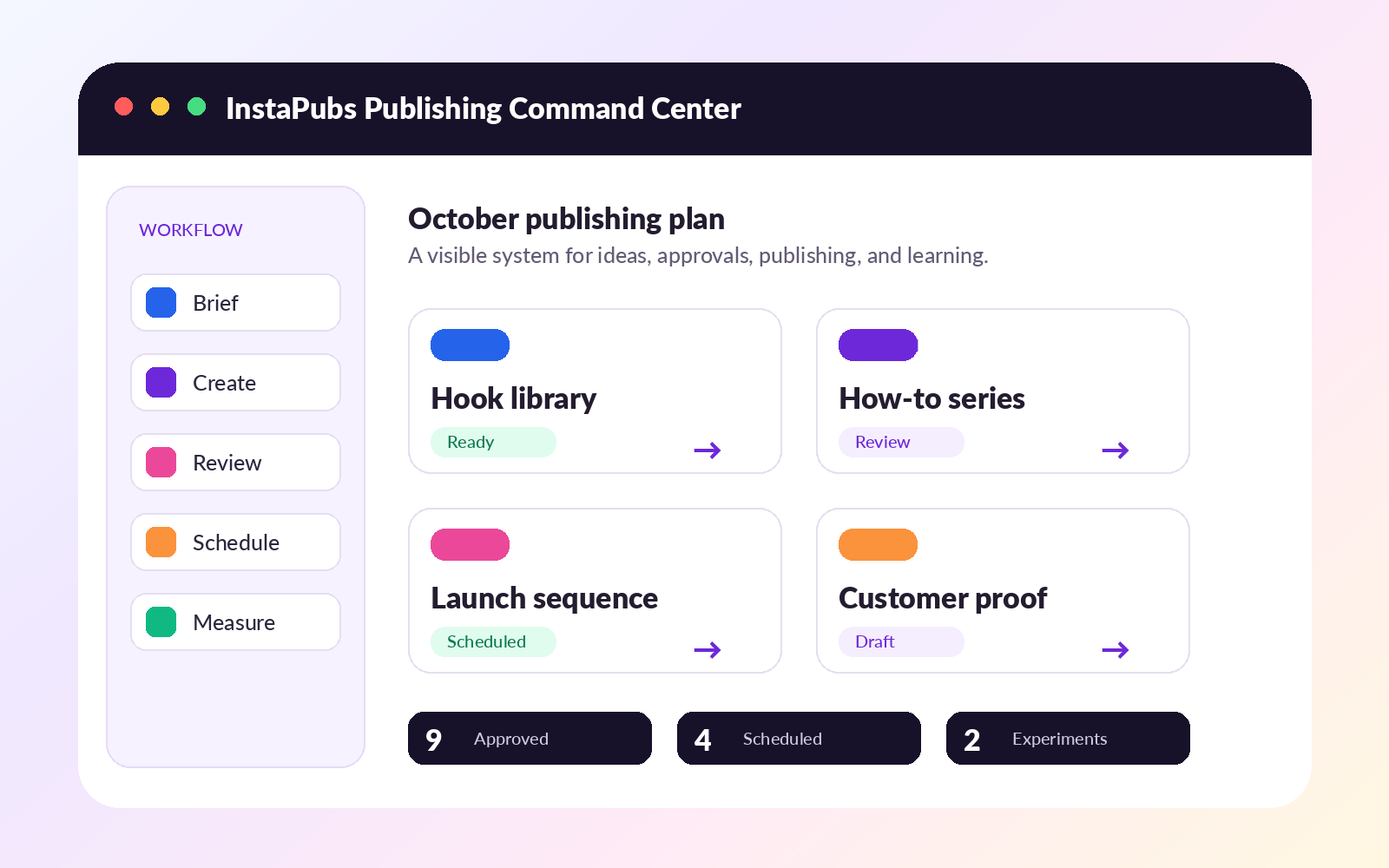
The operating layer
Build the parts in the right order: clear ownership first, then scheduling, tools, integrations, and measurement.
Move ideas through briefs, production, review, preflight, release, and learning with one visible source of truth.
Open the playbookPlan realistic calendars, account for capacity and approvals, and keep room for timely work without constant rushing.
Plan the calendarUse briefs, rights records, media kits, content packages, and reporting templates that support real decisions.
Build the toolkitUnderstand publishing architecture, authorization, media state, job reliability, audit trails, and human fallback.
Read the API guideConnect objectives to metrics, compare similar content, design useful experiments, and change the next brief.
Measure betterRead complete guides on Reels, Stories, UGC, multi-account operations, cross-posting, creator media kits, and more.
Visit the publicationA reusable operating loop
A reliable process protects creativity by making the handoffs around it explicit.
Name the audience, outcome, evidence, action, owner, and constraints.
Build the asset, caption, cover, rights record, and platform metadata together.
Separate creative, factual, rights, and risk decisions with clear deadlines.
Run a preflight, confirm the destination, release, and inspect the live result.
Compare the objective with the outcome and update the next brief.
Start with the workflow
Before adding automation, define the states, owners, approval rules, data, and fallback your team actually needs.
“A calendar tells you when. A publishing system tells you whether the work is ready—and what the team should learn next.”
InstaPubs editorial principle
Latest from The Publishing Desk
Each article includes a practical system, decision points, safeguards, and a path to apply the guidance.
Efficient cross-posting is adaptation, not duplication. Build a content atom, define channel-specific changes, and measure whether each version serves its audience.
Read the guide
A media kit should help a partner make a decision. Replace vanity slides with clear positioning, audience context, relevant proof, deliverables, terms, and contact details.
Read the guide
A useful report changes the next brief. Learn how to connect Instagram metrics to audience objectives, compare like with like, and turn results into publishing rules.
Read the guide
A tag, mention, or public post is not a complete rights workflow. Learn how to request permission, record scope, review claims, credit creators, and handle reuse responsibly.
Read the guide
Publishing across several accounts magnifies every weak handoff. Use an account map, content families, local ownership, and release controls to scale without confusion.
Read the guide
API publishing is a production system, not one request. Learn how to model permissions, media preparation, container state, retries, audit logs, and human fallback.
Read the guideFrequently asked questions
InstaPubs.com is an independent educational publication about Instagram content operations, scheduling, creator workflows, platform integrations, and analytics.
No. The site provides practical guides and operating frameworks. It does not offer account connections, publishing automation, or unavailable software features.
The material is designed for creators, social media managers, agencies, publishers, developers, and small brand teams that need reliable publishing systems.
No. The guides are educational and should be checked against current official platform documentation and professional advice when legal, contractual, or compliance decisions are involved.
Start with the Instagram publishing workflow, then build a realistic content calendar and add analytics only after ownership and approval stages are clear.
Begin with the end-to-end playbook, then adapt the stages to your team and account structure.